Sunday, August 13, 2006
Freddie's Online Puerto Rican Cookbook: Arroz Coqui Coqui (Frog Rice)
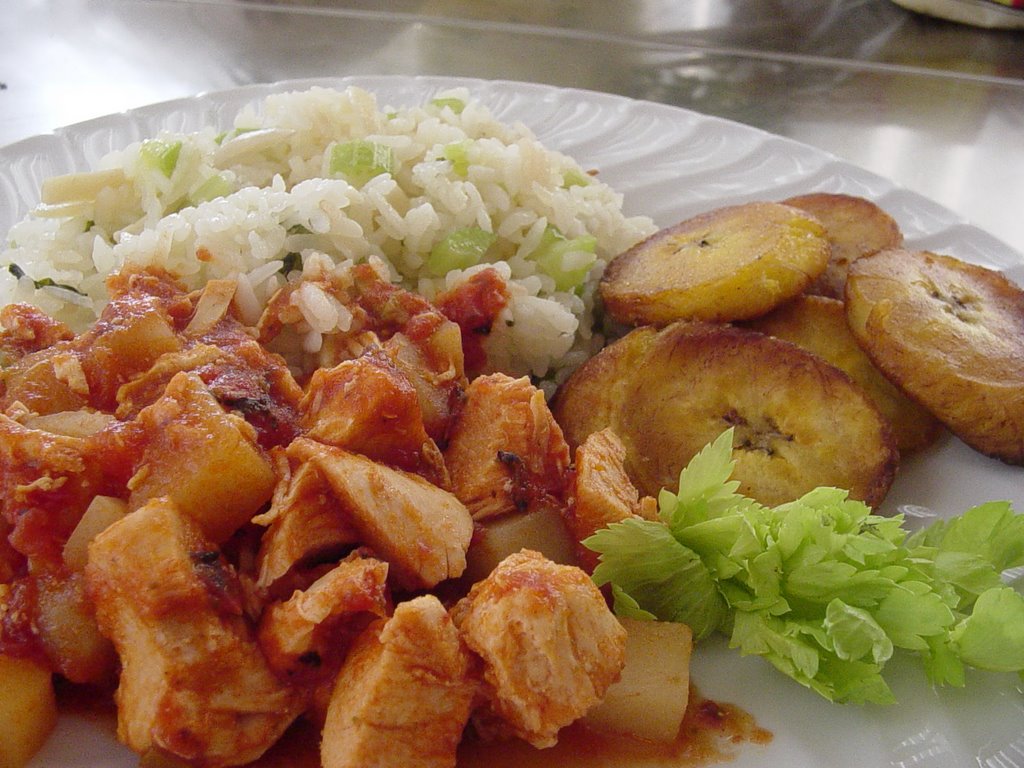
When I made my chicken stew last night, I needed something on the side to soak up all the delicious tomato sauce. I decided on a cilantro rice. This green rice really fascinates me. Its Spanish name is Arroz Coqui Coqui, and it appears it was named after a little brown and green frog native to Puerto Rico called the Coqui. So cute! Even though my dad tends to be a little suspicious of food that's a color other than what he expects, it went over well!
Arroz Coqui Coqui (Coqui Coqui Rice)
Adapted from Freddie's Online Puerto Rican Cookbook
¼ cup (½ stick) unsalted butter
1½ cups short- or medium-grain rice
2 ribs celery, finely chopped
¼ cup blanched, slivered almonds
3 cups chicken broth
2 bunches cilantro, leaves only, finely chopped
½ teaspoon sea salt
Wash the rice to remove the excess starch and drain until dry. In a large pot over medium high heat, melt butter. Add rice, celery, and almonds and stir often until the rice starts to turn golden brown. Add the rest of the ingredients; turn the heat down to medium and cover. Cook until all the liquid is absorbed and the rice is soft, stirring occasionally.
Makes 6 servings
Saturday, August 12, 2006
World Cuisine Recipes: Pollo Guisado (Chicken Stew)
Since it's super hot outside, and also super hot inside my apartment, I decided that I needed a vacation. Preferably a cruise to the Caribbean. But since I don't have any money, I decided to just cook a meal that made me feel like I was in the Caribbean. I decided to go with Puerto Rican cuisine since I haven't had much exposure to it.
After looking at a lot of recipes on the internet for various Puerto Rican specialties, I decided to avoid the traditional arroz con pollo (chicken and rice) and pork recipes. What I came up with was a chicken stew. This chicken dish requires a special ingredient called sofrito. Sofrito is a mixture of green pepper, onion, cilantro, garlic, and an herb called recao. I had quite a time trying to locate some recao since it's also called culantro, long coriander, ngo-gai, Mexican coriander, and saw tooth. In the end I finally found it at a Thai grocery (after the produce guys at Fiesta looked at me like I was crazy). I'm not sure if sofrito is available pre-made, but I made my own batch since it can easily be frozen.
Pollo Guisado (Chicken Stew)
Adapted from World Cuisine Recipes
1½ pounds boneless, skinless chicken thighs, cut into bite-sized chunks
1 teaspoon Goya Adobo seasoning
1 to 2 tablespoons canola oil
3 tablespoons sofrito (see below or use Goya Sofrito)
1 packet Sazón Goya (coriander and annatto flavor)
1 teaspoon sea salt
1 (14-ounce) can fire-roasted crushed tomatoes
12 small pimento-stuffed green olives
2 bay leaves
½ green pepper, coarsely chopped
2 cups chicken broth
2 medium potatoes, skinned and cubed
Season the chicken with the Adobo seasoning. Heat the oil in a large pot or Dutch oven over medium-high heat. Brown the chicken pieces, about 5 minutes on each side. Set aside.
In the same pot, add the sofrito to the remaining oil and stir briefly to release the flavors. Add the Sazón Goya, salt, crushed tomatoes, olives, bay leaves, green pepper, chicken broth, potatoes, and browned chicken. Bring the mixture to a boil, then turn down to medium-low and simmer for 35 minutes, stirring occasionally.
Makes 4 to 6 servings
Sofrito
From Freddie's Online Puerto Rican Cookbook
8 stems cilantro
1 medium green bell pepper, chopped coarsely
1 clove garlic, crushed
1 small onion, chopped coarsely
6 leaves recao/culantro, stems removed
1 tablespoon olive oil
Drop all ingredients but olive oil into a food processor and puree. While processing, add olive oil in a stream.
Wednesday, August 09, 2006
Gretchencooks: Kålstuing (Creamed Cabbage and Red Onion)
Kålstuing (Creamed Cabbage and Red Onion)
From gretchencooks.com
1 large head cabbage, cored and chopped
1 medium red onion, chopped
1½ cups half-and-half
Juice of one lemon
Kosher salt and ground white pepper, to taste
1 teaspoon granulated sugar
Place chopped cabbage, onion, and half-and-half in a large pot. Bring to a boil. Lower heat and simmer until cabbage is soft. Add seasonings. You may need to adjust to your individual taste.
Tuesday, August 08, 2006
Scandinaviancooking: Köttbullar (Swedish Meatballs)
Well, this past weekend I went to IKEA for probably the first time ever (unless my mom snuck me there as a kid when we lived in Virginia). I've never seen such a huge warehouse of stuff that all seems so incredibly important to possess. Everything was so functional and fun! And more importantly...cheap! But the best part was waiting by the exit - the small Swedish food section. A whole little area full of fascinating things like jars of pickled herring and lingonberry jam.
When I got home, I was still in the mood for all things Swedish, so I decided on Swedish meatballs (yes, it's cliché, but delicious) for dinner.
Köttbullar (Swedish Meatballs)
Adapted from scandinaviancooking.com
½ pound ground pork
½ pound ground veal
¼ cup dry breadcrumbs (such as Progresso)
1 large egg
½ cup half-and-half
¼ teaspoon dry mustard
¼ teaspoon freshly ground nutmeg
2 tablespoons canola oil
10 medium white mushrooms, sliced
2 tablespoons all-purpose flour
2 cups beef broth
Combine the pork, veal, breadcrumbs, egg, half and half, mustard, and nutmeg until well mixed. Heat the oil in a frying pan. When it's hot, drop the meatball mixture in small rounds into the hot oil (I use a melon baller to get the right size - they should be small!). Cook for approximately five minutes or until done throughout. Drain on a paper towel. You may have to cook in batches depending on the size of your pan.
When all the meatballs are cooked, add the sliced mushrooms to the fat remaining in the pan. Sauté until soft, probably about five minutes. Sprinkle the flour over the mushrooms to absorb the oil. Add the beef broth slowly, stirring well. The broth will begin to thicken as it simmers. When the broth has started to thicken, add the meatballs back into the pan. Heat through and serve.
Makes 4 to 6 servings
Sunday, July 30, 2006
Around the World in 450 Recipes: Daigaku Imo (Caramelized Sweet Potatoes)
Do you know how hard it is to find recipes for Asian desserts? Ridiculous. They obviously haven't gotten the word that sugar is awesome. They obviously are also missing out on diabetes and high blood pressure, but let's not get too technical. This is about the only thing I could find for a Japanese sweet that didn't involve mochi or red bean paste. And they're actually not too bad. Good job, Japan.
Daigaku Imo (Caramelized Sweet Potatoes)
From Around the World in 450 Recipes by Sarah Ainley
1¼ pounds sweet potatoes
2 to 3 tablespoons canola oil
½ cup granulated sugar
3 tablespoons water
1 tablespoon mizuame (Japanese potato syrup), Lyle's golden syrup, or honey
Black sesame seeds (for garnish)
Peel the sweet potato and slice in half lengthwise. Slice each half into half-moons, about ½-inch thick.
Heat the oil in a large frying pan over medium-high heat. Add the sweet potato and fry until the potato begins to soften. Drain the sweet potato slices on a piece of paper towel and set aside.
Heat the sugar and water in small saucepan over medium heat. The water will come to a simmer and the sugar will melt. Continue to cook until the sugar caramelizes and turns a nutty brown color. Remove the syrup from the heat and stir in the mizuame. Return the syrup to the heat and toss the sweet potatoes in the syrup. When warm, pour the potatoes into a serving dish and sprinkle with black sesame seeds.
Makes 4 servings
Saturday, July 29, 2006
CDKitchen: Onigiri and Around the World in 450 Recipes: Tsukune

Okay, eventually I was going to make Japanese food. It was a given, considering the mountain of books on Japanese culture currently littering the floor of my bedroom. But unfortunately for me, and many other Americans, good Japanese cookbooks are few and far between. And really thin. And I am convinced that the Japanese have to eat more than the same twenty dishes.I made the rice for the onigiri in my handy Zojirushi rice maker that sings to me. (On a side note, why do Japanese appliances sing to you? Even the toilets sing.) I can easily see why these are so popular for lunches and picnics. They're like sandwiches, except better. I am now officially jealous of all the people that get to eat like this on a daily basis. Which is probably the whole nation of Japan.
My only irritation came when I purchased the ground chicken. I really wanted a combination of dark and white meat, but here in the US, if you eat ground chicken, people think you MUST be a health nut, and therefore, you only want ground chicken breast. The butcher already looked harassed enough, so I let it go.
Onigiri (Rice Balls)
From CDKitchen
4 ounces salmon fillet
2 teaspoons sea salt
4 cups medium-grain rice
1 envelope bonito shavings
5 seasoned plums (umeboshi)
2 sheets nori (seaweed wrappers)
Preheat the oven to 400°F.
Rinse salmon and pat dry with a paper towel. Sprinkle with salt. Place the salmon on a rack over a cookie
sheet or small dish and bake for an hour to dry it out.
Cook the rice according to package directions (i.e. without adding fat)
so that it's sticky.
Prepare three bowls. When the salmon is done, ground the fillet up into
small pieces with a fork or mortar and pestle and place in the first bowl. Mash the seasoned plums with a fork and place
in the second bowl. Empty the contents
of one small bonito shavings envelope into the third bowl. Divide the cooked rice into three portions,
and add one portion to each bowl. Mix
lightly to combine with seasoning ingredients.
Wet hands slightly. Dip one
fingertip into leftover salt and smear the salt across your palms so that
sticks on both hands. Take ¼ of rice
mixture from the first bowl. Form into a
ball. Make it compact, but not so much that the grains of rice become mush. Form
into a triangle, square, or cylinder. Repeat
for the remaining rice. Each seasoning
bowl should yield four rice balls, for a total of twelve. Place each one on a piece of parchment paper
to keep them from sticking.
Cut each sheet of nori into three strips lengthwise, then cut each
strip in half. Wrap one small strip of
nori around the bottom of each rice ball to form an envelope to hold it with. Serve immediately.
If you won't be serving immediately, wait to wrap the rice in the nori,
as it will absorb water from the rice and lose its crunch. Instead, wrap tightly in plastic wrap and
refrigerate. Let the rice balls come to
room temperature before serving.
Makes 12 servings
Tsukune (Chicken Cakes with Teriyaki Sauce)
From Around the World in 450 Recipes by Sarah Ainley
1 pound ground chicken
1 large egg
¼ cup grated white onion
1½ teaspoons granulated sugar
1½ teaspoons soy sauce
Cornstarch, for coating
½ bunch green onions, finely shredded, to garnish
1 tablespoon oil
Teriyaki Sauce
Teriyaki Sauce:
2 tablespoons granulated sugar
2 tablespoons mirin
2 tablespoons sake or dry white wine
2 tablespoons soy sauce
Mix the ground chicken with the egg, grated onion, sugar and soy sauce until the ingredients are thoroughly combined and well bound. This process takes about 3 minutes, until the mixture is quite sticky, which makes for good texture. Shape the mixture into 12 small, flat, round cakes and dust them lightly all over with cornstarch.
Soak the scallions in cold water for 5 minutes and drain well.
Heat the oil in a frying pan. Place the chicken cakes in a single layer, and cook over medium heat for 3 minutes. Turn the cakes and cook for 3 minutes longer.
Mix the ingredients for the sauce and pour it into the pan. Turn the chicken cakes occasionally until they are evenly glazed. Move or gently shake the pan constantly to prevent the sauce from burning.
Arrange the chicken cakes on a plate and top with the scallions. Serve immediately.
Makes 12 tsukune
Monday, July 24, 2006
Dim Sum: The Art of the Chinese Tea Lunch: Gau Choi Gau (Chinese Chive Dumplings)
After trying the amazing siu mai from my new dumpling book, I knew I had to keep creating. I had managed to procure some Chinese chives from the Chinese grocery, and one dumpling I absolutely love in the chive dumpling. The shell is almost see-through, so you get a glimpse of the green chives in filling (see round dumplings in back of picture). These were absolutely amazing, crunchy on the outside and pungent and garlic-y on the inside.
Gau Choi Gau (Chinese Chive Dumplings)
From Dim Sum: The Art of the Chinese Tea Lunch by Ellen Leong Blonder
1½ teaspoons salt
½ pound Chinese chives, cleaned, trimmed, and cut in ½-inch lengths
4 ounces shrimp, peeled, deveined, and cut in ¼-inch dice (about ½ cup)
½ teaspoon soy sauce
⅛ teaspoon ground white pepper
½ teaspoon toasted sesame oil
1 teaspoon cornstarch
Wheat Starch Dough, substituting 1 tablespoon glutinous rice flour for 1 tablespoon of the tapioca flour
Peanut or vegetable oil, for pan-frying
Bring 2 quarts of water and 1 teaspoon of the salt to a boil in a large saucepan. Add the chives and blanch for 1 minute over high heat. Drain the chives in a colander, and rinse under cold water to stop the cooking. Squeeze the chives dry and transfer them to a medium bowl. (You should have about 1¼ cups.)
Preheat the oven to 200°F.
Combine the chives with the remaining ½ teaspoon salt, the shrimp, soy sauce, white pepper, sesame oil, and cornstarch. Set aside.
Cut each cylinder of the wheat starch dough crosswise into 6 pieces. Put on piece of dough, cut side up, between two 6-inch squares of baking parchment; then position the flat side of a cleaver blade or a flat bottom of a pan over it and press straight down to form a 3½-inch circle. Peel off the parchment.
Spoon about 2 teaspoons of the filling onto the center of a circle of dough. Make 8 to 10 pleats all around the edge, bringing up the sides evenly, and then pinch closed. Turn the dumpling pinched side down, and pat it gently to flatten it into a 2-inch disk. Repeat with the remaining dough and filling. Lightly dust a board with wheat starch; then place the finished dumplings on it.
Heat a large skillet over medium-high heat, and then add 1 tablespoon oil. When it is almost smoking, arrange one layer of dumplings in the skillet, leaving enough room so they are not touching one another. Cook the dumplings for 2 to 3 minutes on each side, pressing them gently with a spatula, until they turn crisp and just begin to brown. Carefully add ½ cup water (it will spatter), cover the skillet tightly, reduce the heat to low, and cook for 3 minutes, or until the dough becomes somewhat translucent around the sides. Uncover, raise the heat to medium, and cook for 3 to 4 minutes longer, or until the water has evaporated; turn the dumplings to cook until both sides become slightly crisp and light brown. Transfer the dumplings to a serving plate, cover them lightly with foil, and keep them warm in the oven while you make the next batches. Serve hot.
Makes about 18 dumplings
Wheat Starch Dough
1¼ cups wheat starch plus ¼ cup tapioca flour
½ teaspoon salt
1 cup boiling water
1 teaspoon peanut or vegetable oil
In a medium bowl, combine the wheat starch, tapioca flour, and salt. Add the boiling water and the oil and stir with chopsticks or a wooden spoon. While the dough is still very hot, turn it out onto a board dusted with 1 tablespoon of wheat starch. Knead until smooth, adding a little more wheat starch if necessary. The dough should be soft but not sticky.
Divide the dough into thirds. Use your palms to roll each portion into an 8-inch cylinder. Cover loosely with a slightly damp paper towel to keep the dough from drying out. The dough is now ready to cut and press or roll out as needed.
1½ teaspoons salt
½ pound Chinese chives, cleaned, trimmed, and cut in ½-inch lengths
4 ounces shrimp, peeled, deveined, and cut in ¼-inch dice (about ½ cup)
½ teaspoon soy sauce
⅛ teaspoon ground white pepper
½ teaspoon toasted sesame oil
1 teaspoon cornstarch
Wheat Starch Dough, substituting 1 tablespoon glutinous rice flour for 1 tablespoon of the tapioca flour
Peanut or vegetable oil, for pan-frying
Bring 2 quarts of water and 1 teaspoon of the salt to a boil in a large saucepan. Add the chives and blanch for 1 minute over high heat. Drain the chives in a colander, and rinse under cold water to stop the cooking. Squeeze the chives dry and transfer them to a medium bowl. (You should have about 1¼ cups.)
Preheat the oven to 200°F.
Combine the chives with the remaining ½ teaspoon salt, the shrimp, soy sauce, white pepper, sesame oil, and cornstarch. Set aside.
Cut each cylinder of the wheat starch dough crosswise into 6 pieces. Put on piece of dough, cut side up, between two 6-inch squares of baking parchment; then position the flat side of a cleaver blade or a flat bottom of a pan over it and press straight down to form a 3½-inch circle. Peel off the parchment.
Spoon about 2 teaspoons of the filling onto the center of a circle of dough. Make 8 to 10 pleats all around the edge, bringing up the sides evenly, and then pinch closed. Turn the dumpling pinched side down, and pat it gently to flatten it into a 2-inch disk. Repeat with the remaining dough and filling. Lightly dust a board with wheat starch; then place the finished dumplings on it.
Heat a large skillet over medium-high heat, and then add 1 tablespoon oil. When it is almost smoking, arrange one layer of dumplings in the skillet, leaving enough room so they are not touching one another. Cook the dumplings for 2 to 3 minutes on each side, pressing them gently with a spatula, until they turn crisp and just begin to brown. Carefully add ½ cup water (it will spatter), cover the skillet tightly, reduce the heat to low, and cook for 3 minutes, or until the dough becomes somewhat translucent around the sides. Uncover, raise the heat to medium, and cook for 3 to 4 minutes longer, or until the water has evaporated; turn the dumplings to cook until both sides become slightly crisp and light brown. Transfer the dumplings to a serving plate, cover them lightly with foil, and keep them warm in the oven while you make the next batches. Serve hot.
Makes about 18 dumplings
Wheat Starch Dough
1¼ cups wheat starch plus ¼ cup tapioca flour
½ teaspoon salt
1 cup boiling water
1 teaspoon peanut or vegetable oil
In a medium bowl, combine the wheat starch, tapioca flour, and salt. Add the boiling water and the oil and stir with chopsticks or a wooden spoon. While the dough is still very hot, turn it out onto a board dusted with 1 tablespoon of wheat starch. Knead until smooth, adding a little more wheat starch if necessary. The dough should be soft but not sticky.
Divide the dough into thirds. Use your palms to roll each portion into an 8-inch cylinder. Cover loosely with a slightly damp paper towel to keep the dough from drying out. The dough is now ready to cut and press or roll out as needed.
Sunday, July 23, 2006
Dim Sum: The Art of the Chinese Tea Lunch: Siu Mai/Shaomai (Chinese Pork and Shrimp Dumplings)
I've been trying to replicate some of those fabulous dumplings ever since, but every recipe I've come across was just not cutting it. In a final act of desperation, I got one last dim sum book. And just like that, the clouds cleared and all was good in the land of dumplings. These are the real deal.
Siu Mai/Shaomai (Chinese Pork and Shrimp Dumplings)
From Dim Sum: The Art of the Chinese Tea Lunch by Ellen Leong Blonder
8 ounces pork shoulder, coarsely ground or chopped
8 ounces medium shrimp, peeled, deveined, and cut in ½-inch chunks
4 water chestnuts, finely diced
1 green onion, thinly sliced
1 large egg, lightly beaten
1 teaspoon soy sauce
½ teaspoon sea salt
1 teaspoon rice wine or dry sherry
¼ teaspoon granulated sugar
⅛ teaspoon ground white pepper
½ teaspoon toasted sesame oil
1 teaspoon cornstarch
24 packaged siu mai wrappers
In a medium bowl, mix the filling ingredients together and refrigerate for at least 30 minutes and up to 2 hours.
Oil several 8- or 9-inch round cake pans. Put about a tablespoon of the filling onto the center of the packaged wrapper; then gather up the edges all around to form a cup shape. Tap the bottom lightly on a flat surface to flatten the bottom slightly. Repeat with the remaining wrappers and filling. Arrange finished dumplings ½ inch apart in the oiled pans.
Set up a steamer and bring the water to a boil. Steam the dumplings for 12 minutes over high heat, replenishing the pot with boiling water as necessary between batches. Transfer the dumplings to a serving plate. Serve hot.
Makes 24 dumplings
Saturday, July 22, 2006
Popia Thot (Thai Spring Rolls with Dipping Sauce)
I absolutely love eggrolls/spring rolls. I may like them more than the actual Chinese/Thai food. Okay, I DO like them more than the actual Chinese/Thai food. They're a wonderful little package: crispy shell, warm and flavorful meat and veggie interior. And with the right dipping sauce, they near perfection. And no, I do not mean the neon duck sauce that comes in plastic pouches. Didn't your mama tell you that you shouldn't eat things that glow in the dark?
Popia Thot (Thai Spring Rolls with Dipping Sauce)
1 package Spring Home spring roll wrappers
1 (1.3-ounce) bundle mung bean noodles
⅓ pound ground pork
10 shrimp, uncooked, shelled and deveined
2 large eggs
½ cup cabbage, finely shredded
½ cup onion, finely chopped
1 teaspoon garlic powder
½ teaspoon ground white pepper
1 tablespoon granulated sugar
2 tablespoons soy sauce
1 tablespoon cilantro, finely chopped
1 tablespoon green onion, finely chopped
½ teaspoon sesame oil
3 tablespoons cornstarch
Oil for frying
Soak the mung bean noodles in water for 15 minutes or until soft. Drain the noodles and snip into short lengths with a pair of scissors.
Mix together the pork, shrimp, one egg, and next 11 ingredients. Add the noodles and mix well.
Let the spring roll wrappers sit at room temperature for at least 30 minutes before stuffing. Spread a wrapper on a flat surface. Spoon filling in the center. Fold one corner over the filling, fold in the sides, and roll up to the remaining corner. Beat remaining egg and use to seal the roll. Repeat until all the filling is used.
Heat oil in a fryer to 365°F. Fry the rolls for 10 to 15 minutes or until golden brown. The rolls will float when they are done.
If not frying the rolls immediately, dust them with cornstarch and cover with plastic wrap. Refrigerate.
Makes about 20 rolls
Dipping Sauce
¾ cup water
2 teaspoons cornstarch
⅓ cup seasoned rice vinegar
1½ tablespoons soy sauce
1 tablespoon grated fresh ginger
2 cloves garlic, minced
¼ teaspoon crushed red pepper flakes
Whisk all ingredients together in a saucepan. Bring mixture to a boil, whisking until it thickens slightly. Remove from the heat and let cool.
Friday, July 21, 2006
The Dim Sum Book: Nor Mai Gai (Chinese Mixed Rice in a Lotus Leaf)
I'm all about fried rice, so imagine my surprise when I came across this little bundle of joy. Seasoned sticky rice mixed with a bunch of fun fillings, steamed a perfect serving packet. That's about as good as it gets in the dim sum world.
Of course finding a recipe would be much harder. I pulled this one from a newsgroup or something and it took me nearly forever to figure out where it come from. Gosh, I just aged myself. Anyway, I think the ingredient list seems pretty authentic, and I like the results. Just be prepared to take some time to pull this together.
Nor Mai Gai (Chinese Mixed Rice in a Lotus Leaf)
Adapted from The Dim Sum Book by Eileen Yin-Fei Lo
Sauce:
3½ tablespoons oyster sauce
3½ teaspoons granulated sugar
1 teaspoon light soy sauce
2 teaspoons dark soy sauce
1¼ teaspoons salt
2 teaspoons sesame oil
Pinch of ground white pepper
2 tablespoons cornstarch
½ cup chicken broth
9 dried Chinese black mushrooms, soaked, stems removed, chopped
Filling:
2½ cups water
1 piece star anise
¼ teaspoon baking soda
1 (2-inch) knob ginger, mashed
1 green onion, washed, ends discarded, cut in half
½ pound boneless, skinless chicken breasts, cut in 1x2-inch pieces
¼ pound pork butt or 1 double pork chop, cut in ¼x2-inch pieces
¼ pound shrimp, shelled, deveined, dried, and cut in half lengthwise
1 teaspoon peanut oil
1 teaspoon rice wine or dry white wine
Rice:
2 cups glutinous rice (sweet rice)
2 cups medium-grain rice
2 to 3 Chinese sausages (lapcheong)
2 large eggs, beaten
2 ounces barbecue roast pork, cut into 16 slices
3½ tablespoons oyster sauce
3¼ teaspoons granulated sugar
1 teaspoon light soy sauce
2 teaspoons dark soy sauce
2 teaspoons sesame oil
Pinch of ground white pepper
1½ teaspoons sea salt
4 large lotus leaves, cut in 4 triangle sections each
Combine all sauce ingredients and set aside.
Bring the water, star anise, baking soda, ginger, and green onion to a boil in a large wok. Add pork and bring again to a boil. Add chicken and bring again to a boil. Add shrimp. When the shrimp turns pink and curls, remove all ingredients and let them drain in a strainer. Remove the green onion, star anise, and ginger, and discard.
Wash wok and dry thoroughly. Heat for 30 seconds over high heat. Add peanut oil and spread around. Add blanched meats. Stir around for about 1 minute. Add rice wine. Mix thoroughly. Make a well in the center of the ingredients. Stir sauce and add to meat. Mix well and quickly, until the sauce thickens and turns a dark brown. Transfer to a shallow dish. Allow to come to room temperature. Refrigerate, covered, for 2 to 3 hours or overnight.
Soak lotus leaves in hot water for 1 to 2 hours until soft.
Wash rice 3 to 4 times in cold water and drain. Place in rice cooker. Wash sausages and place on top of rice. Steam. This will make a lot of rice. After steaming is complete, cut sausages into 16 slices and set aside.
Fry beaten egg in a little peanut oil into a thin sheet. Slice into ribbons and set aside.
Place cooked rice in a large mixing bowl; add the oyster sauce, sugar, soy sauces, sesame oil, white pepper, and salt. Mix well. Divide filling into 8 equal portions.
Take 2 leaves and overlap one another. Place 3½ ounces of rice in the center. Pat it down lightly. Add 1 portion of filling, 2 slices of barbecue pork, 2 slices of sausage, and a few egg ribbons. Cover with another 3½ ounces of rice. Wrap mixture and steam for half an hour.
Bundles cannot be frozen. Will keep in the refrigerator for 2 to 3 days. Steam for half an hour to reheat.
Makes 8 bundles
Soak lotus leaves in hot water for 1 to 2 hours until soft.
Wash rice 3 to 4 times in cold water and drain. Place in rice cooker. Wash sausages and place on top of rice. Steam. This will make a lot of rice. After steaming is complete, cut sausages into 16 slices and set aside.
Fry beaten egg in a little peanut oil into a thin sheet. Slice into ribbons and set aside.
Place cooked rice in a large mixing bowl; add the oyster sauce, sugar, soy sauces, sesame oil, white pepper, and salt. Mix well. Divide filling into 8 equal portions.
Take 2 leaves and overlap one another. Place 3½ ounces of rice in the center. Pat it down lightly. Add 1 portion of filling, 2 slices of barbecue pork, 2 slices of sausage, and a few egg ribbons. Cover with another 3½ ounces of rice. Wrap mixture and steam for half an hour.
Bundles cannot be frozen. Will keep in the refrigerator for 2 to 3 days. Steam for half an hour to reheat.
Makes 8 bundles
Subscribe to:
Posts (Atom)